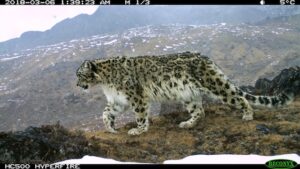
A rare glimpse of a snow leopard prowling through the high-altitude wilderness of Kangchendzonga National Park, captured by a trail camera.
Credit: WWF/Sikkim
By Diwash Gahatraj
SIKKIM, India, Jun 17 2026 – The tea arrives before the conversation starts. Jayanta Mukhia sets two cups on the wooden table and pulls up a chair across from the couple who arrived that afternoon with trekking poles and rucksacks. They have come to walk the Goechala trail into the heart of Khangchendzonga National Park in India. They will leave in two days. Before they go, she has something to tell them.
Jayanta asks if they know what happens to the garbage they carry in. Some of it comes back out. Some of it does not. In the high pastures above Yuksom, a town in West Sikkim, the trail climbs toward the glaciers, and plastic bags caught in the rocks stay there through winter. Army camps, tourists, and trekking groups – they all leave something behind. That waste feeds dogs that follow the trails running through the same corridors where snow leopards move at night.
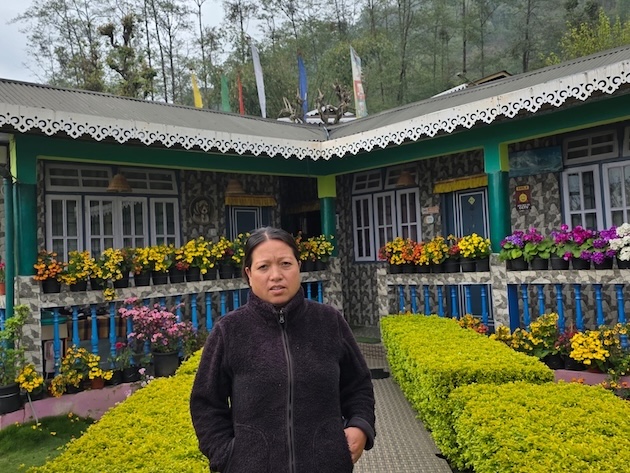
Jayanta Mukhia outside the Chungda Hidden Family Homestay in Yuksom, West Sikkim. Credit: Diwash Gahatraj/IPS
Her husband, Chungda Sherpa, started the Chungda Hidden Family Homestay in Yuksom in 2012, when he was still a trekking guide who knew every switchback on the Goechala route. Today he handles the bookings, the outreach, and the digital presence that brings guests from cities they have never visited. Jayanta runs everything else, the kitchen, the guests, the conversations at the wooden table, and the quiet insistence that every person who sleeps under her roof leaves the park cleaner than they found it.
“The homestay earns between eight and ten lakhs (about USD 8,400 to 10,500) a year. That income exists because the park exists,” she says.
According to Tshering Uden of the Khangchendzonga Conservation Committee, Yuksom has 15 hotels, 25 homestays and more than 21 travel agencies registered under the local Panchayat, all of whose income depends directly on Khangchendzonga’s ecological health. Their collective livelihood runs on the same high-altitude corridors where Sikkim’s 21 snow leopards live.
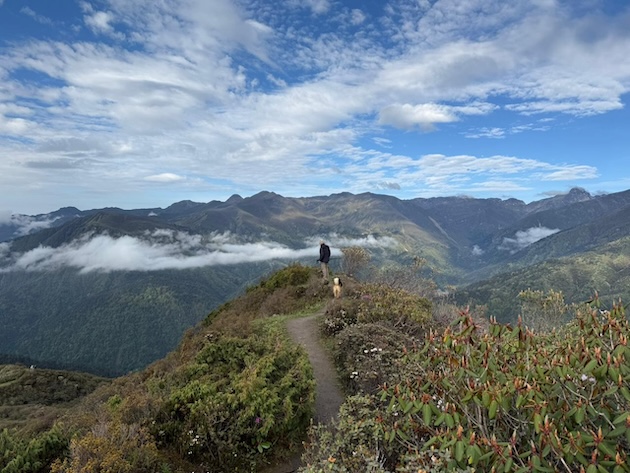
A hiker admires the view in the Khangchendzonga National Park. Credit: Shering Uden, KCC.
Guardian of the High-Altitude
Known locally as Saagey, the snow leopard is revered as a sacred guardian of the high-altitude ecosystem in Sikkimese Buddhist tradition, its conservation inseparable from the beliefs and pastoral lifestyles of the communities that share its landscape. Khangchendzonga National Park, inscribed as India’s first mixed natural and cultural UNESCO World Heritage Site in 2016, sits at the heart of this landscape.
India’s first national snow leopard population assessment surveyed the Trans-Himalayan region between 2019 and 2023, deploying camera traps at nearly 2,000 locations across about 120,000 square kilometres and counting 718 snow leopards across six Himalayan states and union territories. Sikkim recorded 21, a modest figure in a rugged landscape where the cats share space with herders, trekkers and Dzo transporters. The SECURE Himalaya project, supported by the Global Environment Facility, helped make that count possible by building community-based monitoring capacity across the high mountains, demonstrating that conservation works best when local communities are invested in it.
This is a hyperlocal account of what that investment built in one corner of a much larger effort.
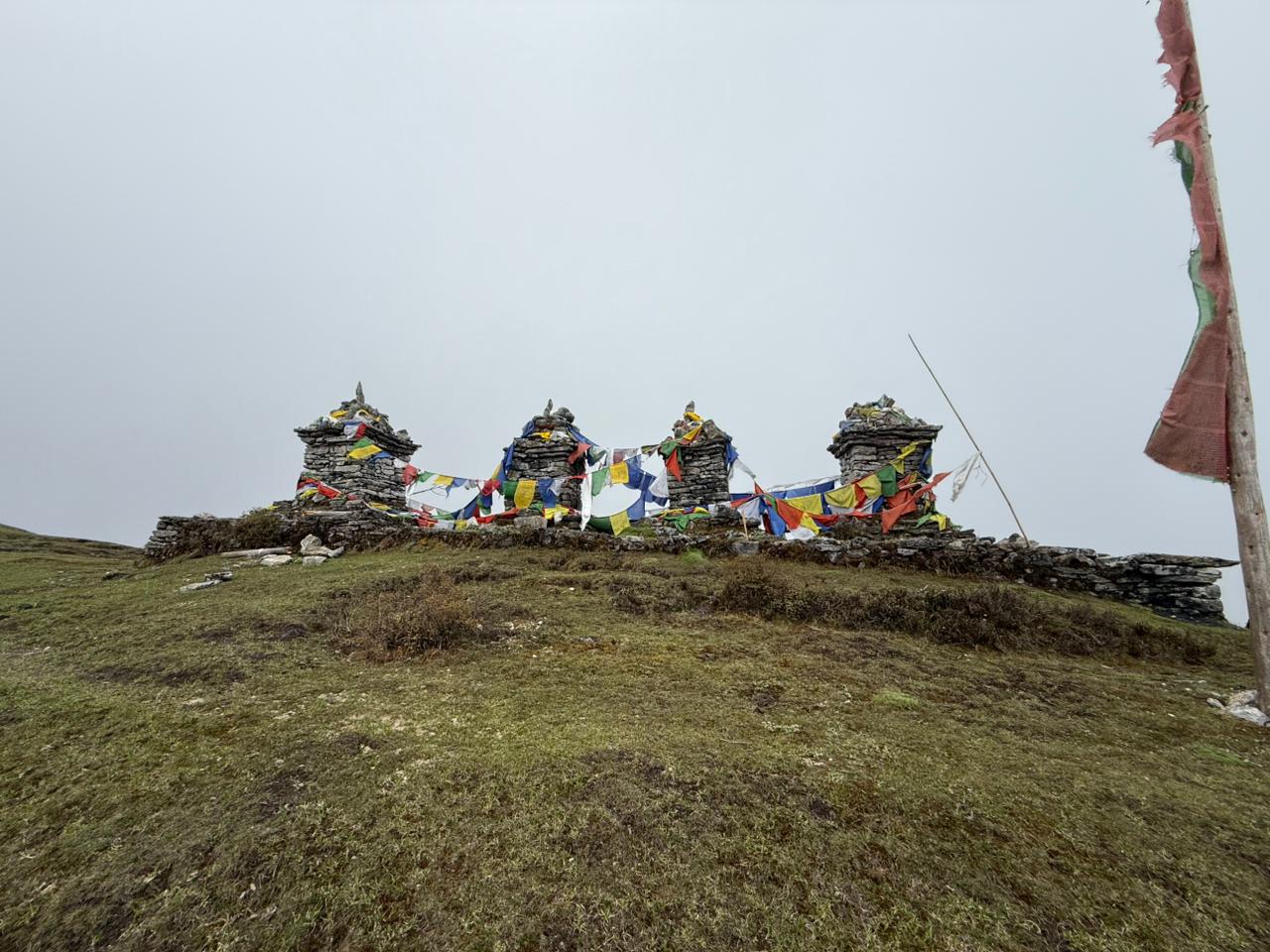
Buddhist stupas covered in flags serve as a spiritual landmark on high-altitude trekking trails, such as those leading to Mount Kanchenjunga. Credit: Shering Uden, KCC
SECURE Himalaya ran for nearly seven years across four Himalayan states: Himachal Pradesh, Uttarakhand, Sikkim and the Union Territory of Ladakh. In Sikkim, it focused on the Khangchendzonga-Upper Teesta landscape – roughly 4,000 square kilometres from Khangchendzonga National Park down to the upper catchment of the Teesta River. Backed by a GEF grant of USD 11.5 million and over USD 60 million in co-financing from the Government of India, the funding went into four interconnected areas: conserving key biodiversity zones, securing sustainable community livelihoods, reducing human-wildlife conflict, and building knowledge systems for long-term landscape management.
In Sikkim, this translated into camera trap networks, community patrol volunteers, women’s handicraft enterprises, and waste management systems all designed around a single argument: that communities with an economic stake in a healthy landscape will protect it.
The project received a Highly Satisfactory rating from independent evaluators for results, relevance and efficiency. Khangchendzonga National Park recorded one of the largest improvements in management effectiveness across all project sites.
One of the project’s most practical interventions targeted feral dogs, which had become a dominant predator in North Sikkim, chasing snow leopards from their kills and hunting the blue sheep and pika the cats depend on. “The project worked with army establishments in Sikkim to set up biodigester facilities in strategic locations to manage food waste from army camps, which helped directly address the feral dog problem,” says Ruchi Pant, who oversaw SECURE Himalaya’s reporting at UNDP India. “The army subsequently scaled up these biodigesters using their own resources.” The initiative has continued independently, one of several project interventions that continues even though the project’s funding has ended.
Young volunteers were trained as Himal Rakshaks, protectors of the Himalaya, to set camera traps, patrol Khangchendzonga National Park and report sightings. The Sikkim Forest Department has since integrated them into its regular operations, with volunteers supporting fire line management and routine monitoring alongside forest guards. The State Biodiversity Board has constituted 196 Biodiversity Management Committees across Sikkim, many of them women-led, operating under the Biological Diversity Act 2002.
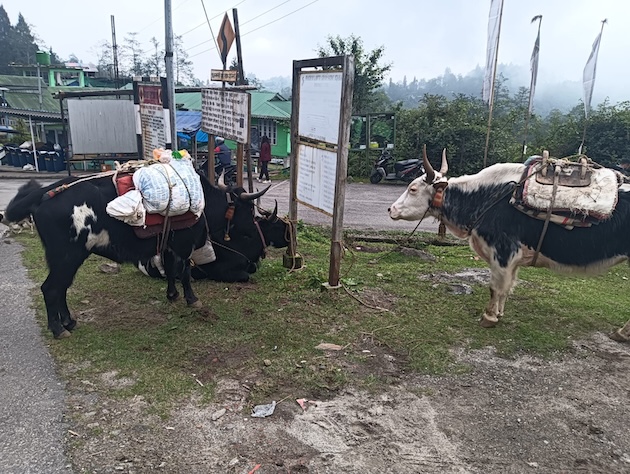
Nedup Bhutia’s dzo loaded with trekking supplies at the Yuksom trailhead, West Sikkim, ready for the Goechala trek into Khangchendzonga National Park. Credit: Diwash Gahatraj/IPS
In Yuksom, the results were visible in ways the community could measure. The KCC trained trekking guides, porters and tourism operators to monitor trails, manage waste and report wildlife sightings. The project’s midterm review cited its zero-waste management model as a national best practice. In 2022, the programme was formally handed over to the Yuksam Gram Panchayat Unit and now runs under the Block Administrative Centre, according to Tshering Uden — a concrete example of the institutional transition the project was designed to achieve. Blue sheep, rarely seen in the national park before the project, are now a regular presence on the slopes. More blue sheep means a more reliable prey base for snow leopards, and fewer reasons for the cats to come down and take livestock.
“Before the project we only heard about snow leopards in our area,” says Tshering Uden. “Now we have picture evidence.”
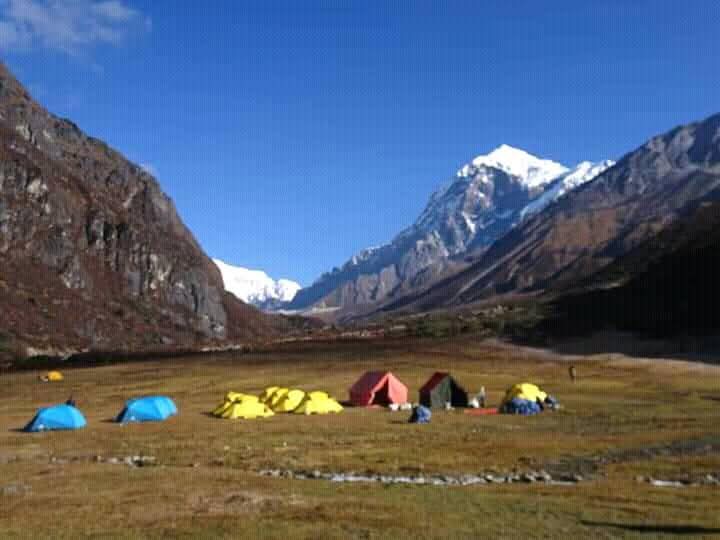
Tents in the valley of the Khangchendzonga National Park. The zero-waste aspect of its zero-waste management model, including from visitors to the park, has been cited as a national best practice. Credit: Shering Uden, KCC
A Shift in Mindset
Udai Gurung of the Sikkim Forest Department says the project changed the department’s fundamental orientation. “The biggest shift was conceptual,” he says. “The forest department moved from a protection-centric model to a landscape-level, coexistence-based approach.”
The project ended in 2024. GEF funding was always designed to be temporary and not a permanent handhold but a spark for something that continues under its own momentum. By that measure, the terminal evaluation rated the project highly satisfactory for results, relevance and efficiency, while assessing sustainability as moderately likely, noting that targets were met in full and, in some instances, exceeded.
The long-term expectation, consistent with how all GEF projects are designed, is that technical capacity and systems developed under the project are handed over to the government to carry forward.
In Sikkim, that transition is underway. Gurung identifies the slow release of funds as the single biggest structural challenge throughout implementation, not a shortage of money, but a bureaucratic delay in releasing funds already allocated. In high-altitude Sikkim, where the working season is a matter of weeks, entire field seasons were lost waiting for approvals. “Capacity exists,” he says, “but long-term sustainability will require consistent financial and institutional support.”
That support now rests primarily with local and state authorities. The Himal Rakshaks operate within the Sikkim Forest Department. The BMCs sit under the State Biodiversity Board. The zero-waste programme runs under the Yuksam Block Administrative Centre.
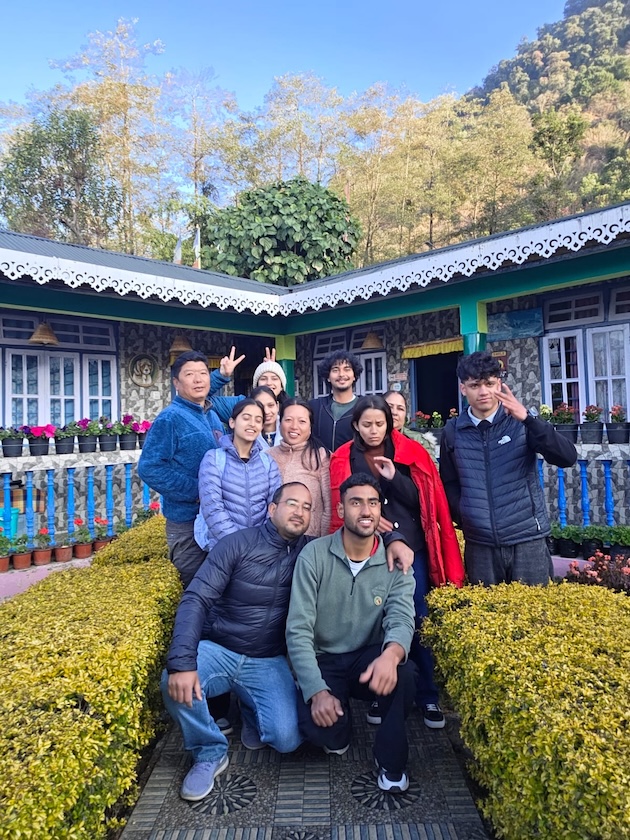
Jayanta Mukhia outside the Chungda Hidden Family Homestay in Yuksom, West Sikkim. Credit: Diwash Gahatraj/IPS
Women in North Sikkim continue weaving nettle fibre and accessing premium markets independently.
In May 2023, Sikkim announced its first biodiversity heritage site – Tunkyong Dho – a sacred lake in Dzongu supported by the local biodiversity management committee. UNDP remains involved at a smaller scale through the German IKI ICCA programme, a portion of which continues to support the Himalayan landscape.
The most concrete unfinished work is the compensation system for herders. Pema Yangden Lepcha, a researcher and project associate at the Ashoka Trust for Research in Ecology and the Environment’s Himalaya Initiative in Gangtok, has spent months talking to yak herders in North Sikkim.
Herders there recently told her they had lost five yaks to snow leopard predation. An adult yak costs between 80,000 and 100,000 rupees. Government compensation is a fraction of that, and most predation happens on Forest Department land where herders are often told the department cannot help.
“They have a very negative attitude toward snow leopards,” Pema says, “and often feel a strong urge to retaliate.” Closing that gap so that herders who bear the cost of coexistence are fairly compensated is the single most urgent task for the local authorities now responsible for this landscape.
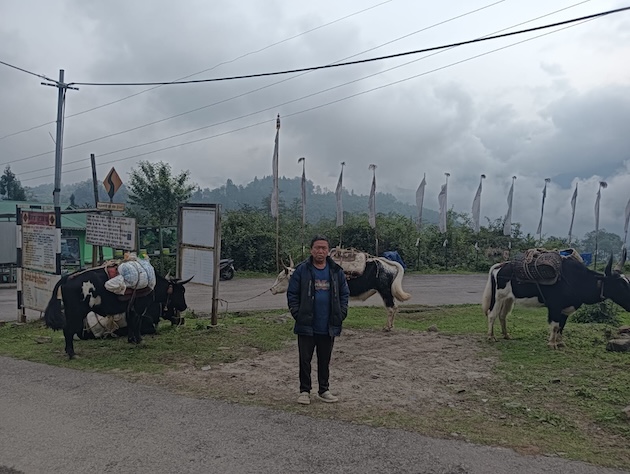
Nedup Bhutia’s dzo loaded with trekking supplies at the Yuksom trailhead, West Sikkim, ready for the Goechala trek into Khangchendzonga National Park. Credit: Diwash Gahatraj/IPS
Carrying it Forward
On the trail, Nedup Bhutia has walked the Goechala route for twenty years with his eleven dzo. He earns between one and one and a half lakhs each trekking season, porting visitors into the park. He has never seen a snow leopard. But three years ago, a two-year-old ox was found dead in the open in Jhamtong village on the park’s periphery, killed by a snow leopard overnight. For Nedup, it is proof of a landscape still alive.
In Yuksom, at the wooden table in Chungda Hidden Family Homestay, Jayanta Mukhia is refilling two cups of tea. Her guests leave tomorrow. They will carry their garbage out. She has made sure of it.
The 21 snow leopards are still there. The communities are still working. The project succeeded by every measure the evaluators applied. What happens next depends not on outside funding but on whether the institutions and communities that inherited this work choose to build on it. That is where the responsibility now sits and where the real test of SECURE Himalaya’s legacy begins.
Note: This feature is published with the support of the GEF. IPS is solely responsible for the editorial content, and it does not necessarily reflect the views of the GEF.
IPS UN Bureau Report
!function(d,s,id){var js,fjs=d.getElementsByTagName(s)[0],p=/^http:/.test(d.location)?’http’:’https’;if(!d.getElementById(id)){js=d.createElement(s);js.id=id;js.src=p+’://platform.twitter.com/widgets.js’;fjs.parentNode.insertBefore(js,fjs);}}(document, ‘script’, ‘twitter-wjs’);